Francesca Pallitta
eSomethin Staff
AI, as most people know it as, has been evolving since 1956 when the term “Artificial Intelligence” was first created. Even as little as five years ago when someone would bring up Artificial Intelligence, the first thing that might come to your mind is maybe a “Terminator” robot or an out-of-this-world alien. Now AI can be incorporated and used in students’ everyday lives.
Artificial Intelligence can be seen in many different forms such as ChatGPT, Sora AI, Grok, and even human Tesla robots. Billion-dollar businesses like Google and billionaires like Elon Musk and Jeff Bezos have also joined the race of who can make the smartest and successful AI.
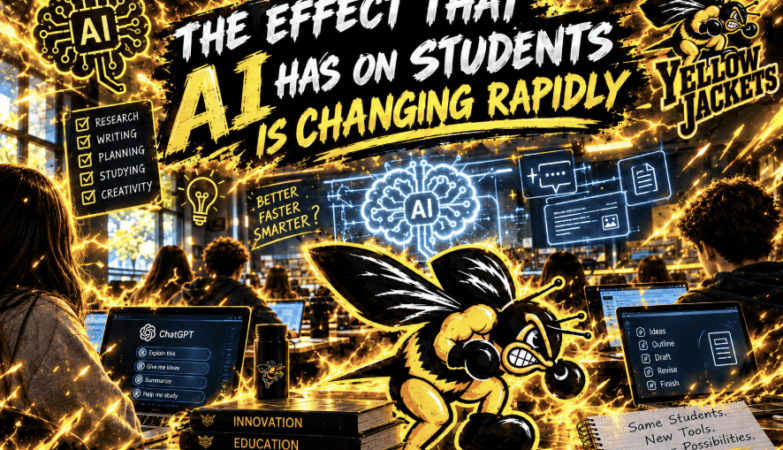
Artificial Intelligence sped into everyday people’s social and work lives – from the Taco Bell drive through to Snapchat filters. It has also made a major impact on students’ work in school.
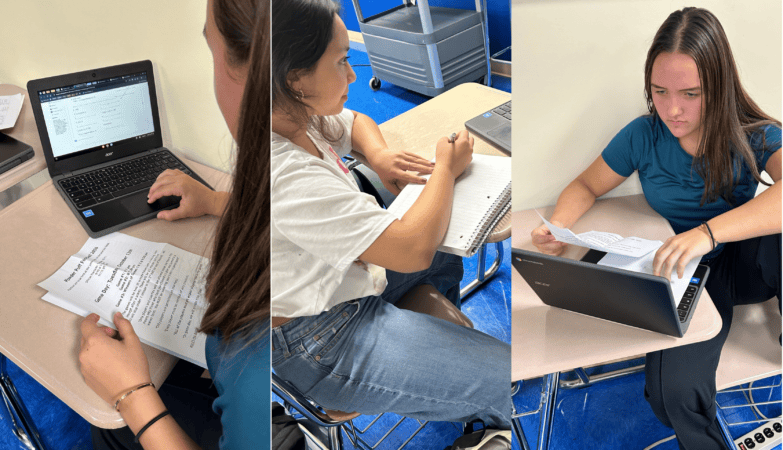
In almost every school class you’ll hear or see a student using ChatGPT to help complete their assignments. Schools take major precautions to stop the use of unethical use of AI. Not only PHS but schools around the world have had to block AI websites, use platforms to detect AI use, and seriously punish students that cheat using AI.
There are many pros and cons to the use of Artificial Intelligence in an educational setting, both for students and teachers.
Grace Davis, a PHS English teacher, says that AI can be a useful tool to help teachers.
“I think it can really enhance and create really cool learning opportunities. And also just use it for quick feedback for students,” Davis said.
Ron DeGregorio, a PHS Government teacher, stated he uses AI in many ways. He can create test retakes, email parents, format slideshows, or even make the lesson plans he teaches to students.
Teachers are presented with many useful and easy perks with the use of AI to help them teach.
While some teachers view AI positively, but PHS senior Madison Fisher says AI can be harmful.
“You pick the easy option and use AI, but in the long run it’s really damaging because you’re not thinking for yourself and you’re not practicing and learning those skills and making those mistakes to learn from,” Fisher said.
Students hear regularly from teachers and higher-ups that Artificial Intelligence is bad and has a negative impact on students. A common feeling is that students use AI to cheat in school is that they don’t want to do their work. While that answer might be partially true, PHS student Fisher digs deeper.
“I think a lot of people don’t realize it’s a problem that stress builds up on students. There’s so much pressure to meet deadlines and so in the rush of the moment it’s just easier” Fisher said.
Even though Fisher says she is against the use of AI, she still shows sympathy towards students who feel the stress that makes them want to cheat using AI.
“I just kind of feel bad for them – not having the time or ability to do work yourself is something really difficult. I don’t always think it’s their fault,” Fisher said.
PHS students and teachers show a mix of opinions on the topic of AI in schools. Some teachers and students say Artificial Intelligence is negative, but others believe it is positive. Students may not be allowed to use AI now, but from what teachers say, students might be presented with the perks of AI for their school work soon.
Other stories on eSomethin:
- The effect that artificial intelligence has on students is changing rapidly
- Stepping up to the challenge: meet Michael Acomb, Perrysburg’s newest superintendent
- Jacket Time is a controversial addition to the schedule at PHS
- OPINION: PHS hallways are confusing. What can we do to change that?
- Buzz Brief 10/2/26