Sophia Halm, Editor-in-Chief
eSomethin staff
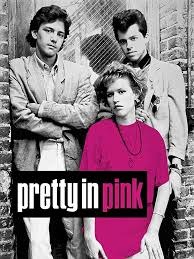
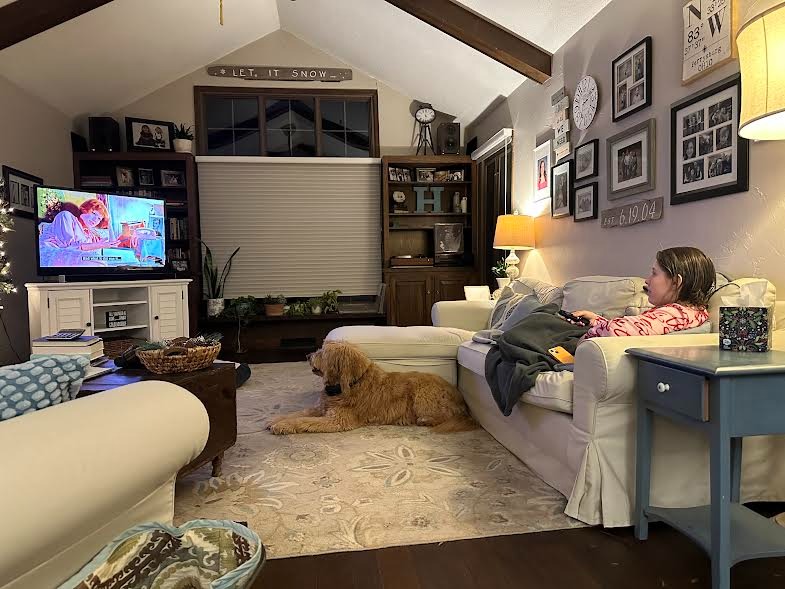
Pretty in Pink, a classic staple of many John Hughes teenage films, was released 40 years ago. Returning with its anniversary is sweet nostalgia. In 1986, the film quickly became popular, as it starred relevant members of the “Brat Pack,” such as Molly Ringwald and Andrew McCarthy. The film was extremely relevant to high school students of the ‘80s, anywhere from hanging out at the record store to getting the perfect dress for prom. Underneath all the 1980s fashion and activities, major themes were presented that the audience could take to heart, involving class and individuality. As a senior in high school in 2026, I sat down and watched the classic for its anniversary and here was my experience:
The film opens up to The Psychedelic Furs’ hit song, “Pretty in Pink,” which was very fitting to the title and a warm welcome to the unmatched 1980s vibes. The camera pans over the more run-down side of town which is where the main character, Andie, lives. I think this was a great way to naturally reveal her working class status in comparison to the richer homes later shown in future scenes. This movie serves a needed reminder that all towns have their better or worse sides to them. It allows an insight to peoples’ lives that may be living in a different class than theirs.
The fashion in this film is undoubtedly telling of its time period with the giant hair and bulky shoulderpads. Andie is a creative girl with a fashion-designer’s potential, standing out from all of her peers. She sews and creates her own outfits, which not only saves her money so she and her single father can afford other things, but also allows her to be undeniably herself. Her fashion choices are questionable, in my opinion, as I definitely would not wear them. There are so many patterns and gaudy jewelry that are too much to look at. However, I can respect that she builds her own style and I know for a fact that my opinion would not affect Andie if I were talking to her in the movie. In a time where all my classmates are overcome with fads and trends, I always appreciate those who make their own fashion choices and stand out. That is bold and confident, and it’s nice knowing they’re comfortable in their own skin in a school full of kids figuring themselves out. So despite my uncertainty with Andie’s fashion choices, I admire her ability to emanate confidence and be her own person.
Early on, I learned that Andie lives alone with her father and that her mother left them. This had obviously taken a toll on her father as he is clearly dejected, struggling to get out of bed and find more employment. Although, Andie’s dad is very dedicated to his daughter and promised he will do better for her. Through her father’s struggles, Andie reflects her independence. She is responsible for waking her dad up in the morning, making him breakfast, and encouraging him to get another job. As a senior in high school she is being left with adult responsibilities which is a hefty expectation for a teenager. It was very exciting for Andie when her dad told her got a job and decided to get his life under control. I bet this was a relief for her to finally get a chance to experience her teenage years at a better level.
When I was introduced to Blane, I quickly learned he was of higher class, along with his friends. They express their style with “sophistication” by wearing suit jackets on the daily, all blending into the same plain aesthetic. They think they’re entitled and above their lower class peers because they have money. This includes the incident where Blane’s friend, Steff, talked vulgarly to Andie as his attempt to hit on her, outside of her car. He claims he wants to go out with her, but when she rejects him, he immediately insults her. He thinks that he is entitled to take her out without opposition because of his status, but when he realizes Andie has self-respect, it enrages him and damages his ego. I cannot stand Steff and the way he talks like he can do no wrong and owns the world. He is a disgusting, rude character and every time I see that blonde mullet on screen I cringe. In fact, I do not think I have seen a movie where his actor, James Spader does not play a dirtbag. Maybe Spader prefers to play jerks.
Additionally, there is a group of rich popular girls that tear apart Andie’s looks and status. Unshockingly, the main popular girl, Benny, becomes Steff’s side piece later in the film. This was likely to get back at Andie because she hates them both, but the two popular kids are so evil—they’re perfect for each other. The scene where Andie’s friend stands up against the popular girls in gym class is iconic because it finally gets back at all the disgusting shaming the rich girls have done and puts them in their place. The score evens out between the two cliques as their battle continues, and I’m obviously rooting for Andie’s side. The entitlement of the rich kids is infuriating.
One of my favorite settings of this film is the Trax record store. It is such a classic 80s symbol, and the vibes are immaculate. The store manager and Andie’s friend, Iona, is a cool, quirky, and bold character. She wears wild, spiky hairstyles, and is super outgoing towards customers. She has the store decorated from top to bottom, giving it the classic retro look. She appreciates her decor, saying “It’s so modern!” I found this funny as records are now considered a vintage way to play music by today’s standards. I’m an old-soul by heart and use a record player and have so much respect for local record stores. I think many of my peers that only use earbuds and Spotify would think the idea of a record store like Trax is wild. It is a fun blast from the past and an iconic symbol. If it was not clear that this movie was from the 1980s, it will be now.
Duckie is this quirky, ultra-hyper, and sassy companion to Andie, whether she likes him or not. Duckie is absolutely enamored with her and follows her around like a little puppy dog. He’s up in her face, always trying to get her attention. I have a love-hate relationship with his character as he tends to be very over-the-top and annoying. He also is extremely obsessive and a borderline stalker. Andie constantly shows how she feels as they are only friends, yet he keeps pushing. Some people might find that yearning romantic, but I find it pushing the boundaries.
When Blane walks into Trax for the first time, it is apparent that Andie and him are interested in each other. They make continuous prolonged eye contact and eventually directly flirt with each other while he purchases a record. Today, the nerve to flirt in real life has diminished because of the ability to hide behind our phones. Teen relationships were so different before technology. However, there is a scene where in the library, Andie is on the computer and Blane is messaging her from the other end. This little exchange was an early example of instant messaging and was a telling symbol that communication might evolve into this in the future. I found this clever and interesting, realizing maybe teens in the 80s were not so far off from us today.
One of the most symbolic representations of class in this movie was at their school during lunch. The rich kids all loiter in the hallway inside while all the kids with some type of variation hang out outside in the back court of the school. There’s all types of kids outside, some with lower class like Andie and some with big spikey punk-rock hair. They’re all seemingly proud of being different in comparison to the popular kids who all look like boring clones in suit jackets. When Blane ventures outside of his designated realm, he gets dirty looks from everyone else. Neither group is fully accepting of the other, providing tension. Finally, Blane asks Andie out and she agrees, but is hesitant to tell him where she lives out of embarrassment, proving class is a bigger deal to these kids than thought. Steff immediately judges Blane for talking to Andie, calling her a “mutant.” He’s being classist and obviously bothered that Blane is getting her attention rather than him. My take is that those who resort to insulting others when their ideal situation doesn’t turn out is a direct reflection of blatant insecurity. Steff may seem a tough and macho man, but he truly is a pouty, unconfident boy.
When Andie is ready for her date, waiting in Trax with her very patterned outfit and pearl necklace (very grandma-looking in my opinion), she realizes she might be getting stood up. I felt her pacing and anxious application of her lipgloss was a very relatable feeling. There is so much anticipation in waiting for something that when it starts to go awry, it’s easier to distract myself rather than face it as what the truth may be. To make matters worse, Duckie shows up trying to ask Andie out on a date as well. Having to reject someone has such a guilty feeling associated with it. It’s easy to feel bad for letting them down, but at the same time it’s not as if the rejection is on purpose. How one feels is not controllable. Now Andie has the anticipation of her date arriving and the stress of rejecting Duckie on her shoulders all at this moment. Duckie, clearly hurt, yells at her and I felt so bad for him. At the same time, Andie could not help it. It’s unfortunate how love works sometimes. This is still relevant amongst many teen relationships, and finding the correct approach to these situations can be very difficult.
Finally, Blane showed up to take her out, fashionably late. He asked her what she wanted to do, and it was almost as if he was not truly listening because he was insistent on taking her to a party that Steff, of all people, was hosting. This was the first time Blane gave me an ill impression. He clearly was not paying attention to how Andie did not want to go to the party, which was pretty selfish. To compile, once Andie reluctantly agrees, Blane asked, “So do you wanna go home and change?” My blood was boiling. No boy should have the right to tell a woman what to wear, and here he was insensitively asking her to change when she was already done-up for him.
I could’ve told Blane that partying was not Andie’s cup of tea from the start. Clearly he did not get the memo. I felt terrible for Andie as she awkwardly made her way through the rich-kid party, getting dirty looks and judgy comments all throughout. The pinnacle of misery happened when Andie walked in on Steff and Benny: her two biggest enemies. Their interaction is hostile and aggressive with Steff making Andie feel unwelcome and Benny dropping a slur, telling Andie she should leave. I’m not sure if it should have taken his mean friends talking that way to Andie for Blane to get the hint that she did not want to be at that party, but they finally left. Blane made the first right move of the night, allowing Andie to pick where they should go next. They go to their local club, which the fact that these high schoolers were allowed in was shocking, and she finds her friend Iona to sit with. Of course, the third point of the love triangle was also there: Duckie. My social anxiety could never. Duckie really gets on my bad side in this scene because he is a jerk to both Blane and Andie all because he’s hurt from the rejection. I understand his frustration but his retaliation is petty and childish.
When it came time for Blane to take Andie home, she got embarrassed and flustered again, asking him to drop her off at Trax. Blane does not get the hint and insists on dropping her off (which is very sweet, but can he ever get a hint?). This ends with her crying and blurting out that she doesn’t want him to see where he lives. Obviously Blane is confused by this, showing that he truly did not care about her financial status. This interaction was a heavy one to watch, and I got a little emotional over it. It was very well-executed, and I was able to feel empathetic for Andie. Finally, at the end of their date in Andie’s driveway, Blane asks Andie to the prom and she accepts with a kiss. This gave me immense relief after what a rocky date that was.
A day after the date, Steff pulls Blane aside and tells him that bringing Andie to his party was not an okay move. He thinks that it’s embarrassing for Blane to go out with Andie because she is poor and even calls her “trash.” Then, he threatens to end their friendship if Blane continues to go out with her. First off, Steff is so incredibly insulting to Andie and I think that adds to his insecurity complex. Secondly, I think that Steff both is jealous of Blane and also does feel superior and entitled to the lower class. He is so antagonistic it makes me want to gag – or “Gag me with a spoon,” as they’d say in the 1980s – ew. I think the worst part is that Blane seriously contemplates losing his friendship with Steff, ghosting Andie in the process. It was interesting to see ghosting, which typically shows up in Gen-Z relationships, so early. This leads me to believe that the lack of communication in our generation is not entirely our fault.
One of the most emotional scenes of the movie is when Andie has an argument with her dad over her mom who left them. He kindly gets her a loud, pink, sparkly prom dress, knowing that she could turn it into something better. Then, Andie tells him that she knows that he has not been able to get another job because he cannot move on from his wife. She gives it to him straightly, explaining that her mom is not coming back and he needs to move on. I was impressed by her ability to tell him the truth because with heavy topics, it’s often hard not to sugarcoat things. Sometimes hearing the truth is needed. John Hughes’ films always do a great job of teaching lessons between characters, and that is something I can admire amidst some of his controversy.
I knew as soon as Andie was waiting for Blane outside of his locker that it was about to go down. She has already developed herself as a strongheaded and confident individual. I knew she would have zero problems with a confrontation. She yells in Blane’s face, tears welling in her eyes, trying to get him to admit that he is afraid to be seen with her. Blane hides behind an excuse, which is a wimpy move by the way, and suddenly their prom date is called off. I was so proud of Andie for standing up for herself, but at the same time I was so sad that they were no longer together. The corniness of the 1980s film technique shone through as Duckie and Steff were both seen lurking ominously, watching this all go down. Steff villainously walks away feeling accomplished, and realizing what happened, Duckie fought him. This really showed true dedication to Andie, despite the rejection. Duckie truly cares for her, even as a friend. Was fighting the answer? No, but it was nice to see Steff get some punishment.
Here it is…the reveal of the prom dress that Andie had been working on for her dance that she no longer has a date to. This reveal is what the title was based on—what the audience has been anticipating, and it’s…ugly?! Andie’s prom dress reveal has been one of the biggest disappointments in cinema history. Her chopped up prom dress was mixed with Iona’s old one, and it turned out hideous. Aside from this giant disappointment, I remembered that the dress, although the movie was named after it, was not the main point. The bigger concern was Andie and her prom. Andie decided to go to the prom despite not having a date, saying, “I just want to let them know that they didn’t break me.” I felt so uplifted by her confident ability to enter her school dance alone with all the judgmental eyes on her. Yet again, my social anxiety could never. On her way into the dance, she sees Duckie waiting for her at the entrance. Whether he was just being loyal to his friend or if he was trying to get her to be his date one last time, seeing him at the top of the stairs was touching. After all his annoyance and obsession, I was able to appreciate Duckie for the genuine friend that he is. Rewatching this movie, I always remember by the end why Duckie is deep down a good character. Everyone needs a Duckie in their life, despite how annoying and sassy they can be.
The prom is an 80s masterpiece, with the giant permed and decorated hair, the puffed sleeves of the dresses, and the whimsical beat of the music. Steff and Benny are planning to ditch—they must be “too cool” for prom too—and Blane is wallowing at his table alone. Many classic movies have a song associated with them, where it plays as a nostalgic reminder of the film when heard in public. For this movie, it’s “If You Leave” by Orchestral Manoeuvres in the Dark. When that familiar synth beat starts to play, I’m instantly taken back to Andie’s prom in Pretty in Pink. The moment Blane and Andie make eye contact from across the room, everything stops and I can’t help but smile. When Steff catches Blane trying to reconcile with Andie, he again threatens him with his snobby tone. Finally (took him long enough), Blane snaps back saying that he can buy everything, but he could not buy Andie. This puts Steff and his entitled persona in their place. Finally, after cringing this whole movie over Steff and his annoying ability to get away with being such a dirtbag, he’s shut down.
Suddenly, the line that has made every teenage girl squeal for three generations, Blane says, “I love you. Always.” Their reconciliation is the best part of this film, proving that there does not need to be a border between rich and poor relationships. Not to mention, “If You Leave,” playing in the background is the perfect touch to this romantic scene. This may be cliche, but I will never turn down a movie where love always wins.
What Duckie does next is so respectable. He gives up Andie to Blane, despite his strong feelings for her. From this, I knew that Duckie truly wanted the best for Andie, and as obsessed as Duckie may be, he still was selfless enough to give her up. Yet again, I always remember why I end up loving Duckie so much.
The majority of John Hughes’ teen films are well-known and well-loved. I appreciate his efforts to highlight the feelings or experiences of all types of teenagers. This makes them feel seen, and despite the 1980s style or controversy altogether, many of his themes still hold strong today. I am aware of John Hughes and his controversial choices as a filmmaker, but I believe that his good themes can be appreciated while recognizing the flaws of his thinking. For this movie, I liked how he took a very real situation and allowed it to play out in a way that would resonate with teens of all generations. Molly Ringwald’s character promoted individuality and that is so important in high school where everyone is so judgemental or still figuring themselves out. This move also shortened the social gap between the rich and the poor, which promotes needed unity. The specific 1980s elements of this movie make the filming easily laughable, yet cherished. This movie is a classic and continues to resonate with teens. I highly recommend revisiting this classic of a movie to celebrate its 40th birthday and to keep the nostalgia and adoration alive.
Other stories on eSomethin: