Arabella Logan
eSomethin staff
Summer is a much needed break from the stressors of school for most students. It’s a time of fun memories that take you outside through the beach, cookouts, family time, etc. However, not every student is positively impacted by summer break, and sometimes there can be downsides for students who value school for different reasons such as an escape from home, a time to see friends, school counseling, etc.
School has a lot of resources that students can benefit from, like lunches and free lunches for students who qualify for it. School can be a time to hangout with friends, get in-school counseling, and sometimes just to get a much needed escape from home life. There can be a negative impact on students who benefit from those things, especially students who rely on those benefits.
Morgan Sakowski, a PHS social worker, says “Students benefit from far more than just academic instruction at school. Many rely on consistent meals through breakfast and lunch programs, access to mental health support through school counselors and social workers, and a structured, predictable environment.” She says that school is good for much more than just education, and it can be something students truly rely on for things like access to trusted adults, an environment surrounded by their peers, and extracurricular activities.
There are also resources that some students do not realize some people benefit from such as the full experience fund, which allows students to be fully covered for things like yearbooks, school dances, and much more. Students who benefit from things such as the full experience fund do not get the same support for activities outside of school during break since it does not extend to out of school experiences.
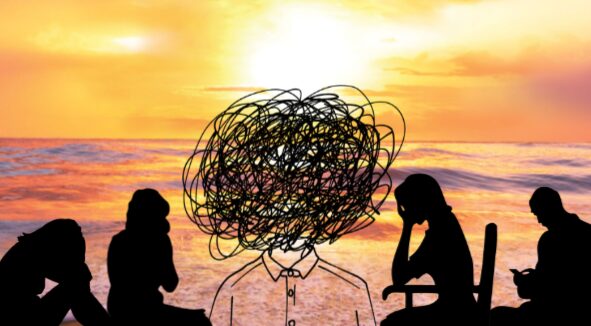
Sakowski says that she notices how breaks truly affect students mentally. They go from an environment where they are supported in more ways than just academically, to suddenly being stripped of those benefits. Sakowski says, “Students can experience increased stress and instability. Food insecurity may rise without school meals. The loss of structure can make it harder for students to regulate emotions or maintain routines. Students who rely on our school counselors/social worker for mental health support may feel the absence of a trusted adult to talk to, which can lead to increased anxiety, depression, or behavioral challenges. Even the loss of daily peer interaction can contribute to feelings of disconnection.” There are many ways that the loss of the day to day school environment can lead to negative effects on student’s minds and health. In fact, many students can feel isolated through long breaks such as summer.
Many students lose access to daily interactions with their peers or adults they trust, and they can be shut out into a world where they feel alone during break. Sakowski says, “While some students stay socially connected, others may spend long periods alone or in environments with limited interaction. This isolation can be particularly difficult for students who already struggle socially or emotionally, as school is often their main source of connection.” It can be difficult for some students to stay in the loop and to communicate with people outside of school, and for some students that can be a serious problem, and lead to isolation.
Over break, students do not have access to the adults that they trust at school like teachers, counselors, or social workers. Sakowski states that “during the school year, students have regular, often informal access to support just by being in the building. Over breaks, that access disappears, and not all families have the ability or resources to seek outside mental health support.” Not having access to meetings with trusted adults like counselors and social workers that are provided by the school can lead to increased stress levels, feelings of isolation, students feeling lost or helpless, and much more.
Some students also do not have the best home life, and value school as their escape. School can be a safe place for students to feel supported and cared for, and Sakowski says that “extended time at home may increase exposure to conflict, neglect, or instability.” Sometimes, home is even a matter of unsafety or abuse, and students may feel trapped in a place they do not want to be. This can result in increased stress and anxiety as well as sometimes unsafe coping mechanisms and behavior.
There are still resources outside of school that many students do not realize they have or can rely on. For example, trusted adults can be found outside of school even if it isn’t at home. It could be a neighbour, a grandparent, coach, etc. There are also other resources that are available to students through break. Sakowski says, “There is a free meal program during the summer called SUN meals, and also a Summer EBT (sunbucks) program.” This program is open to individuals ages 1-18, and students who already have been approved for free lunches at school receive $120 for each child in the family.
As for mental health support, Sakowski says that the suicide hotline, 988, is always open and ready for anyone who needs it. Dialing 211 is also a great help to anyone who needs it, and it is a support system available in wood county. It is available for things like food support, clothing, transportation, or other necessities for families who need it. Of course, social workers are still available and accessible during the summer if a family has access to communication with them.
Despite summer break having some negative impacts regarding many aspects of health, there are ways that students can get help and feel supported over break. Local therapy organizations such as Anchored In Hope or Vital Health offer summer programs for intensive and less intensive mental health care. The camps involve many options for activities and socialization, as well as help for mental health issues. Enrolling for Vital health can be found at Vitalhealth.com or by contacting (419) 740-3022. Enrolling for Anchored In Hope can be found on their site: Anchoredinhopecounseling.org, or by contacting their front desk at (419) 491-0420. The Wood County children’s resource center can be reached at (419) 352-7588 and they offer many home based services such as home based therapy as well as day treatment programs that run similar to camps. The Wood county site, NAMI, offers a lot of options for help as well as resources, and can be accessed at namiwoodcounty.org.
The Vital Health summer program runs from June 1st to August 7th, for around 10 weeks. Vital Health says that their program is very beneficial and for individuals who need help. According to Vitalhealth.com, “[Their] structured summer program supports children who benefit from additional behavioral and emotional guidance. Through therapeutic skill-building embedded into daily activities, [they] strengthen emotional regulation, executive functioning, and social communication in a setting designed for lasting progress.” It can be a highly beneficial and also a fun experience for individuals who lack help at home.
Anchored In Hope offers a summer program as well as a program through the school year, Anchoredinhopecounseling.org says, “This structured, therapeutic program blends social skills development, expressive arts therapy, and interactive, hands-on activities. Children build confidence, learn healthy coping strategies, and develop positive relationships in a safe, supportive setting.” Support is an important part of getting help, and Anchored In Hope specializes in it.
There are many resources for students to get help for mental health problems, finance complications, or various issues. Getting help from programs and such is always a beneficial option for students who feel they need help. Summer break can be a hard time for many students for many reasons, and there are many resources to help anyone who struggles. Oprah Winfrey, a woman famous for her motivational messages and guides to self-improvement, once said “Where there is no struggle, there is no strength.” Long breaks can be a great struggle, but there is always a light at the end of the tunnel.